Bob for thin hair hairstyles ideas can create the appearance of fuller, more substantial hair while keeping the overall look polished and easy to manage. The key is choosing shapes that preserve density rather than removing too much weight.
Blunt ends, subtle layers, stacked backs, and strategic volume can all help thin strands look more dimensional. Length also matters, with shorter bobs often creating a stronger perimeter. Whether you prefer sleek, wavy, textured, or softly feathered styling, these bob ideas offer practical ways to make thin hair look stylish and naturally fuller.
Shapes That Make Fine Strands Look Fuller
A well-designed bob can make thin hair appear denser because the shorter length prevents the ends from becoming overly wispy. Keeping the perimeter strong creates a more substantial visual outline.
The right layering technique is equally important. Excessive thinning can make delicate strands look sparse, while subtle graduation can add movement without sacrificing density. Styling the roots with lightweight volumizing products can further enhance the shape.
Blunt Bob for Thin Hair
A blunt bob keeps the ends at a consistent length, creating a strong perimeter that can make thin hair appear fuller. The clean outline also gives the haircut a polished, sophisticated appearance.

Apply volumizing mousse to damp roots and blow-dry with a paddle brush. Keep the ends smooth and straight, or curve them slightly inward. Finish with lightweight texture spray at the roots rather than heavy products through the lengths.
Chin-Length Bob for Thin Hair
A chin-length bob removes excess length while keeping enough hair to create a defined shape. The shorter perimeter helps prevent thin ends from appearing overly wispy.

Apply root-lifting mousse to damp hair and blow-dry upward using a round brush. Smooth the sides while gently curving the ends inward. Finish with flexible hairspray to maintain the shape without weighing down the strands.
Stacked Bob for Thin Hair
A stacked bob creates graduated layers at the back, helping build visual volume around the crown and nape. Longer front sections maintain a flattering, modern outline.

Apply volumizing mousse to damp roots and blow-dry the shorter back sections upward. Use a round brush to shape the front pieces toward the face. Finish with lightweight styling cream through the ends for definition.
Layered Bob for Thin Hair
Subtle layers can give thin hair movement without removing too much density. Keeping the layers concentrated around the crown helps create lift while preserving fuller-looking ends.

Apply root-lifting mousse to damp hair and blow-dry while lifting the crown. Use a round brush to shape the layers gently. Finish with lightweight texture spray, focusing mainly on the roots and upper sections.
Bob with Side-Swept Bangs
Side-swept bangs add movement across the forehead while blending into the bob. Keeping the fringe moderately full prevents it from appearing overly thin or separated.

Create a side part while the hair is damp and apply lightweight mousse. Blow-dry the bangs across the forehead using a small round brush. Style the bob smoothly and finish with flexible hairspray for soft hold.
Textured Bob for Thin Hair
A lightly textured bob creates separation and movement without relying on heavy layering. The result feels modern while maintaining enough density around the perimeter.

Apply texturizing mousse to damp hair and lift the roots while drying. Once dry, use a small amount of lightweight styling paste on selected ends. Avoid overworking the hair so the strands retain their fullness.
Wavy Bob for Thin Hair
Soft waves can create the illusion of additional body and movement throughout thin hair. A relatively full perimeter keeps the shape substantial while the waves add dimension.

Apply lightweight wave mousse to damp hair and scrunch gently. Diffuse on low heat or create loose bends with a curling wand. Once cool, separate the waves with your fingers and finish with flexible texture spray.
Angled Bob for Thin Hair
An angled bob keeps the back slightly shorter while creating longer front sections. The graduated structure adds visual dimension without requiring excessive layers.

Apply volumizing mousse to damp roots and blow-dry the back sections upward. Smooth the longer front pieces toward the face with a paddle brush. Finish with lightweight styling cream through the ends.
Feathered Bob for Thin Hair
Soft feathering can add movement around the face while keeping the main perimeter relatively full. This creates a lighter appearance without making the haircut look sparse.

Apply volumizing mousse to damp roots and use a round brush to direct the feathered sections outward. Blow-dry the perimeter smoothly and finish with flexible texture spray for soft separation.
Bob with Curtain Bangs
Curtain bangs create a gentle center-parted frame while allowing the rest of the bob to maintain a fuller shape. The longer fringe blends naturally into the sides.

Create a center part and apply lightweight mousse to damp hair. Blow-dry each side of the fringe outward with a small round brush. Shape the bob smoothly and finish with flexible spray for natural movement.
Sleek Bob for Thin Hair
A sleek bob emphasizes clean lines and a strong perimeter, making it an excellent option when you want thin hair to look polished and substantial.

Apply smoothing cream sparingly to damp hair and blow-dry with a paddle brush. Use a flat iron only if additional smoothness is needed. Finish with a tiny amount of lightweight serum through the ends.
Tousled Bob for Thin Hair
A tousled bob uses loose bends and root volume to create a fuller-looking silhouette. The relaxed texture keeps the haircut from appearing overly flat or rigid.

Apply volumizing mousse to damp roots and rough-dry while lifting the crown. Create loose bends if needed, then separate them gently with your fingers. Finish with lightweight texture spray for flexible definition.
Short Bob for Thin Hair
A short bob creates a compact silhouette that can make thin strands appear more substantial. Keeping the ends relatively blunt helps maintain visual density.

Apply root-lifting mousse to damp hair and blow-dry upward with a round brush. Smooth the sides and gently curve the ends inward. Finish with flexible hairspray and avoid heavy styling products.
Long Bob for Thin Hair
A long bob provides more length while still maintaining a defined shape. Keeping the ends clean and relatively full prevents the extra length from making thin hair look stringy.

Apply volumizing mousse to damp roots and blow-dry with a paddle brush. Add a gentle bend to the ends using a round brush. Finish with lightweight texture spray focused around the crown.
Asymmetrical Bob for Thin Hair
An asymmetrical bob uses different lengths on each side to create visual interest while maintaining a strong overall perimeter. The unusual shape can make a simple bob feel contemporary.
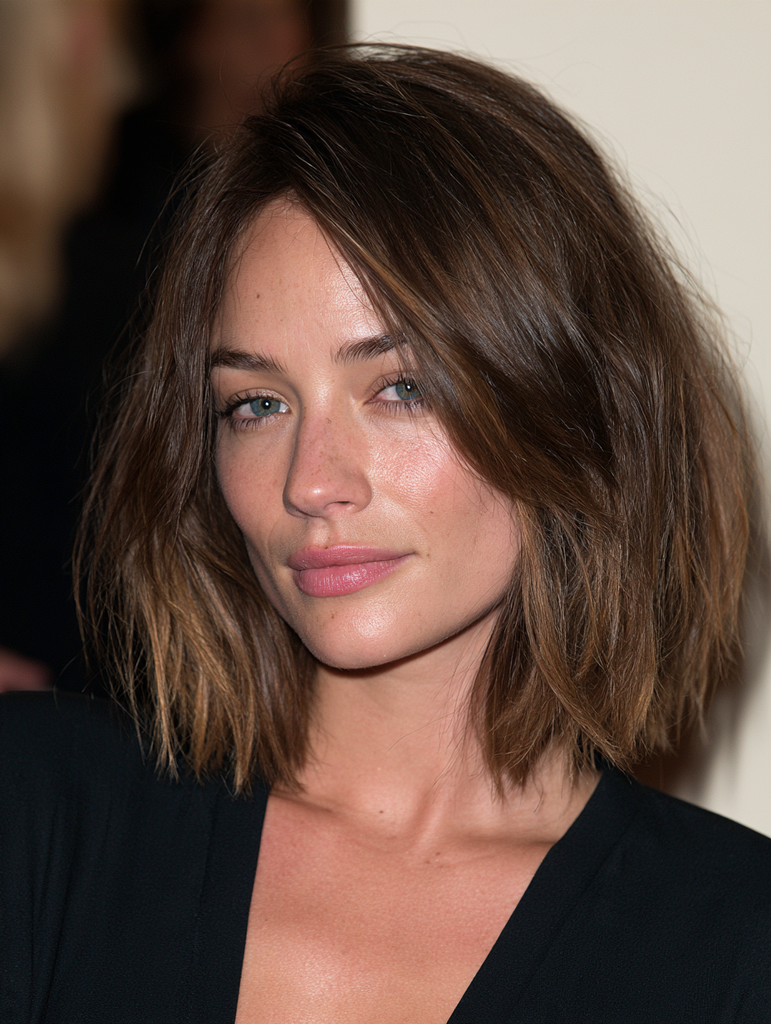
Apply smoothing mousse to damp hair and blow-dry the shorter side close to the head. Smooth the longer side toward the face and finish with lightweight styling cream through the ends.
Building Volume Without Weighing Down Fine Hair
Start with damp hair and apply a lightweight volumizing mousse, concentrating primarily on the roots. Avoid applying heavy oils, creams, or waxes close to the scalp because they can flatten delicate strands.
Blow-dry the roots upward using a round brush, then shape the ends according to your preferred finish. A slight inward curve creates a classic appearance, while loose waves add visible volume. Finish with a lightweight texture spray rather than layering on heavy products.
Choosing the Right Bob for Thin Hair
For thin hair, the strongest starting point is usually a haircut that preserves density around the perimeter. Blunt and shorter bobs can create a fuller-looking outline, while carefully controlled layers add movement without removing excessive weight.
If you want more volume at the back, consider a stacked or graduated bob. For softness, try subtle waves or curtain bangs. A sleek bob emphasizes precision, while a tousled version creates relaxed texture. Which direction appeals to you most: a fuller blunt bob, a voluminous stacked shape, or a soft wavy finish?
