Layered shag haircut hairstyles bring together choppy movement, natural volume, and effortless texture for a haircut that feels modern while retaining a relaxed character. The defining layers create lift around the crown and movement through the sides and ends.
This versatile haircut can be adapted to short, medium, and long hair, making it suitable for different textures and styling preferences. Soft layers create a subtle everyday look, while stronger layering produces a more dramatic silhouette. From feathered finishes to curly shags, these ideas showcase beautiful ways to personalize the layered shag.
Why Layered Shag Haircuts Remain So Versatile
Layered shags continue to work across different hair types because the haircut can be adjusted according to density, texture, and desired volume. Shorter crown layers create lift, while longer pieces maintain movement and balance.
The style also offers considerable freedom when it comes to finishing. It can be worn naturally tousled, softly waved, sleek with defined layers, or enhanced with bangs. This adaptability makes the layered shag suitable for both relaxed everyday styling and more polished occasions.
Long Layered Shag Haircut
A long layered shag keeps plenty of length while adding shorter sections around the crown and face. The result is flowing movement combined with noticeable texture.
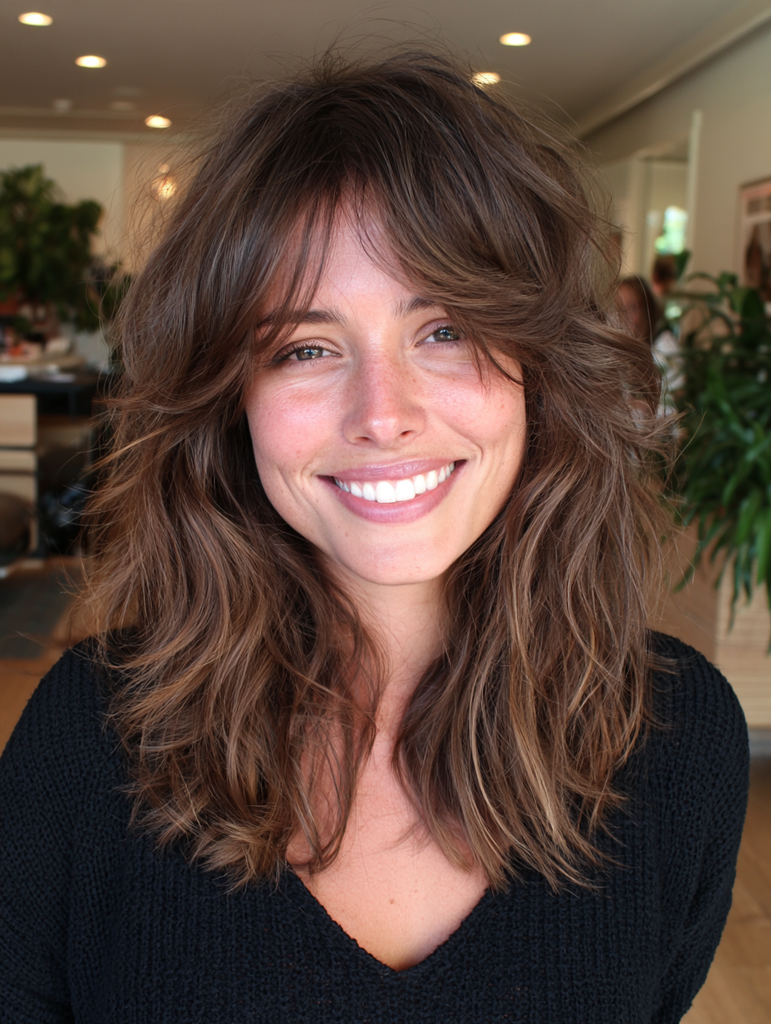
Apply lightweight mousse to damp hair and scrunch the layers upward. Use a diffuser for natural waves or a round brush for a smoother finish. Once dry, separate a few pieces around the face and ends to emphasize the different lengths.
Medium Layered Shag
A medium layered shag creates a balanced shape that falls around the shoulders or slightly above them. The shorter crown layers provide volume while the longer sections maintain softness.

Apply texture-enhancing mousse to damp hair and scrunch gently. Diffuse the roots for additional lift or use a round brush for a polished finish. Finish with flexible texture spray to highlight the layers without making the hairstyle stiff.
Short Layered Shag
A short layered shag offers noticeable texture without requiring substantial length. Shorter crown pieces create lift, while the sides and back retain enough length to frame the head.

Apply volumizing mousse to damp roots and lift the crown while drying. Once dry, use a small amount of matte styling paste to define selected ends. Keep the finish slightly tousled to emphasize the haircut’s relaxed character.
Layered Shag with Curtain Bangs
Curtain bangs naturally complement a layered shag because they blend into the shorter face-framing sections. The center-parted fringe creates a soft opening around the forehead.

Blow-dry each side of the bangs away from the face using a round brush. Add loose waves through the remaining layers and gently separate them with your fingers. Finish with lightweight texture spray for movement and definition.
Layered Shag with Wispy Bangs
Wispy bangs provide a delicate contrast against the stronger texture of a layered shag. The lightweight fringe creates subtle framing without adding visual heaviness around the forehead.

Use a small brush to shape the bangs while drying, then apply mousse through the rest of the hair. Scrunch the layers and allow them to air-dry or diffuse gently. Separate a few strands across the forehead for an airy finish.
Wavy Layered Shag
Natural waves enhance the movement of a layered shag and soften the transitions between different lengths. The waves create dimension throughout the crown, sides, and ends.

Apply wave cream to damp hair and scrunch upward. Diffuse around the crown while allowing the longer sections to dry naturally. Once completely dry, shake the roots gently and separate selected waves with your fingertips.
Curly Layered Shag
Curly hair can create a beautifully voluminous layered shag when the layers are shaped according to the natural curl pattern. Shorter crown sections encourage curls to lift while longer pieces maintain balance.

Apply curl cream to damp hair and scrunch thoroughly. Diffuse on low heat, focusing first on the roots. Once dry, gently lift the crown and separate a few curls around the face without brushing through the entire style.
Layered Shag with Feathered Ends
Feathered ends offer a softer interpretation of the layered shag. Instead of heavily choppy tips, the lower sections taper gradually to create a flowing finish.

Use a round brush to direct the shorter layers outward while drying. Add gentle bends through the ends for extra movement. Finish with a lightweight smoothing cream to control flyaways without flattening the feathered layers.
Layered Shag with Face-Framing Layers
Face-framing layers create additional definition around the cheeks and jawline. The shorter pieces blend into the crown before gradually becoming longer through the sides.

Apply mousse to damp hair and use a round brush to direct the front sections away from the face. For a natural finish, scrunch instead and diffuse. Once dry, separate the face-framing pieces with your fingertips.
70s-Inspired Layered Shag
A 70s-inspired layered shag emphasizes rounded crown volume, feathered layers, and soft movement around the face. The retro shape can be adapted to modern textures while retaining its distinctive silhouette.

Blow-dry the crown upward using a round brush and sweep the front layers away from the face. Add loose bends through the lengths. Finish with flexible hairspray to preserve the feathered shape while keeping the hair touchable.
Layered Shag for Fine Hair
Fine hair can benefit from a carefully constructed layered shag that creates lift without removing too much density. Controlled crown layers can make the hair appear more voluminous.

Apply volumizing mousse at the roots before blow-drying upward. Keep the ends relatively full and use texture spray sparingly. Avoid heavy oils or thick creams that could weigh down fine strands and reduce the appearance of volume.
Layered Shag for Thick Hair
A layered shag can distribute some of the natural weight in thick hair while maintaining fullness. Strategic layering creates movement and prevents the hairstyle from appearing overly dense.

Use a lightweight smoothing cream on damp hair before styling. Blow-dry with a paddle brush for a controlled finish or scrunch for natural texture. Finish with a small amount of serum through the ends to manage flyaways.
Layered Shag with Side Bangs
Side bangs add a diagonal element to the layered shag and create a soft frame across the forehead. The longer fringe can blend into the face-framing layers around the cheekbone.

Create a side part while the hair is damp and direct the bangs toward one side. Apply texture mousse through the layers and scrunch gently. Diffuse or blow-dry according to your natural texture, then define selected ends with styling cream.
How to Style a Layered Shag Haircut
Start with damp hair and apply lightweight mousse or texture cream, concentrating around the roots and mid-lengths. Use your fingers to distribute the product evenly through the layers.
For a polished finish, use a round brush to shape the crown and face-framing pieces. If your hair is naturally wavy or curly, scrunch and diffuse on low heat. Once dry, separate individual layers with your fingers rather than brushing everything smooth.
Choosing Your Layered Shag
The ideal layered shag depends on your preferred length, natural texture, and desired amount of volume. Long versions create flowing movement, medium cuts offer balance, and short shags produce a more compact textured silhouette.
Bangs and face-framing pieces can further customize the haircut. Curtain bangs create softness, while side or wispy bangs provide a different type of framing. Would you choose a long feathered shag, a voluminous 70s-inspired cut, or a short modern version?
