Layered hair for wavy hair is a beautiful way to enhance natural movement while creating shape, volume, and dimension. Strategic layers allow waves to form more freely instead of falling into one heavy, undefined shape.
From soft face-framing layers to textured shags and long cascading cuts, there are plenty of ways to customize this style. Layers can make thick waves feel lighter while giving fine waves more visible movement. Whether you prefer polished beach waves or naturally tousled texture, these ideas offer versatile inspiration for your next haircut.
What Gives Layered Waves Their Easy Movement
Wavy hair already has natural movement, and well-placed layers can make that texture more noticeable. Removing carefully selected weight allows individual waves to form instead of becoming compressed beneath heavier sections.
Layering can also create different silhouettes depending on placement. Crown layers add volume, face-framing pieces soften the front, and longer layers preserve length while improving movement. The key is creating enough structure to support the waves without removing so much weight that the ends lose their fullness.
Long Layered Waves with Face-Framing Pieces
Long layered waves create a flowing silhouette while maintaining plenty of length. Face-framing pieces can begin around the cheekbones or jawline and gradually blend into the longer sections.
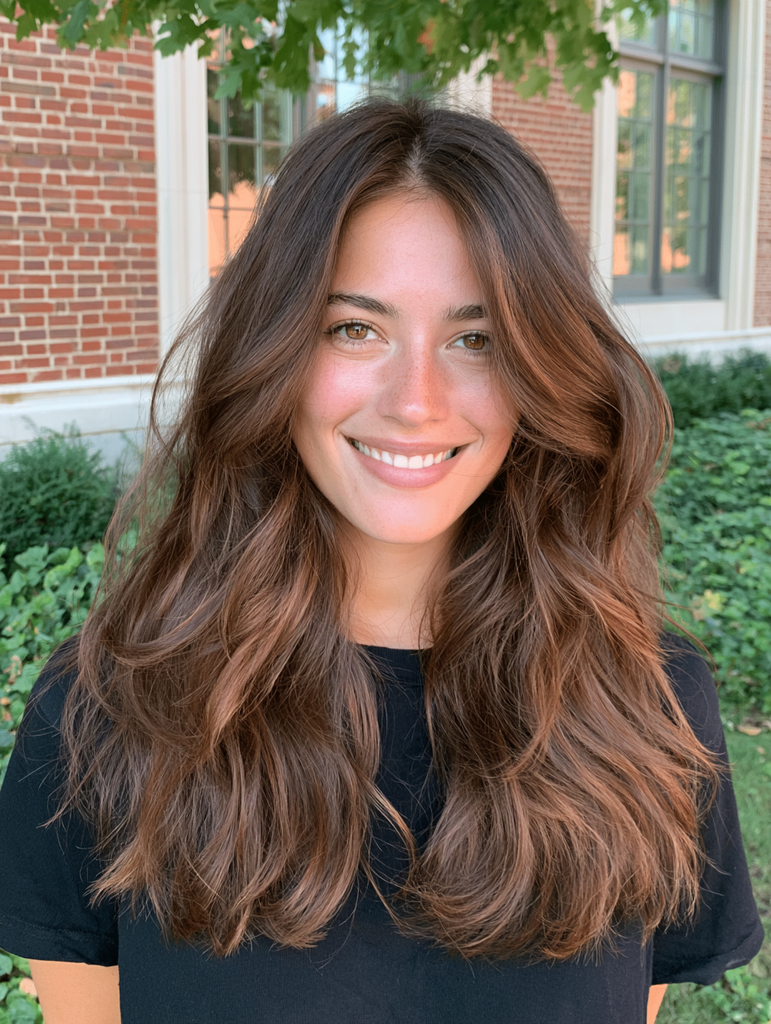
Apply lightweight mousse to damp hair and scrunch gently to encourage the natural wave pattern. Allow the hair to air-dry or use a diffuser on low heat. Once dry, separate a few front pieces with your fingers for soft definition and movement.
Layered Wavy Bob
A layered wavy bob gives a classic haircut a relaxed, textured personality. Subtle layers throughout the shape prevent the waves from becoming too bulky while maintaining a recognizable bob silhouette.

Apply wave-enhancing cream to damp hair and scrunch from the ends upward. Diffuse gently or allow the hair to dry naturally. Once dry, use your fingers to loosen the roots slightly. Avoid brushing through the waves because it can create unnecessary frizz.
Shoulder-Length Layered Waves
Shoulder-length layered hair offers a versatile balance between manageability and movement. The layers allow waves to form throughout the haircut while preventing the ends from looking excessively heavy.

Work lightweight mousse through damp hair, concentrating on the mid-lengths and ends. Scrunch gently and diffuse if needed. For additional polish, twist a few face-framing sections around your fingers while drying. Finish with a flexible texture spray to maintain separation without stiffness.
Layered Wavy Shag
A layered shag enhances natural waves by combining shorter crown pieces with longer, textured sections. The result is full of movement and has an intentionally relaxed appearance.

Use a lightweight mousse or texture-enhancing cream on damp hair. Scrunch the layers upward and allow the waves to dry naturally. If your hair needs additional volume, use a diffuser around the crown. Keep the ends separated rather than overly smooth to emphasize the shag’s textured character.
Long Layered Waves with Curtain Bangs
Curtain bangs create a soft frame around the forehead while long layers allow natural waves to flow through the rest of the hairstyle. The fringe should blend gradually into the shorter face-framing pieces.

Create a center part while the hair is damp and direct each side of the fringe outward. Apply wave cream to the lengths and scrunch gently. Once dry, loosen the waves with your fingers and allow the curtain bangs to curve naturally around the face.
Layered Wavy Lob
A wavy lob combines the versatility of medium-length hair with natural texture. Strategic layers prevent the waves from creating too much weight around the lower half of the haircut.

Apply mousse to damp hair and scrunch thoroughly. Use a diffuser to create additional definition or let the waves air-dry for a softer appearance. A tiny amount of lightweight serum can smooth flyaways without flattening the natural texture.
Feathered Layers for Wavy Hair
Feathered layers give wavy hair a softer, lighter appearance by tapering selected sections around the face and ends. The technique creates movement without making the haircut look excessively choppy.

Use a round brush if you want a smoother feathered effect, or allow the waves to dry naturally for a more relaxed finish. A lightweight styling cream can define the ends. Keep the layers blended so the waves flow smoothly from one section into another.
Layered Wavy Hair with Side Bangs
Side bangs blend beautifully with wavy layers because the diagonal fringe can transition naturally into the surrounding texture. Keep the bang long enough to accommodate the natural movement of the hair.

Direct the fringe toward one side while damp and encourage the wave with your fingers. Scrunch the remaining layers and diffuse gently. Once dry, use a small amount of styling cream to separate the front pieces and keep them defined without making them stiff.
Layered Wavy Hair with a Deep Side Part
A deep side part can instantly create additional volume in layered wavy hair. The waves naturally fall across the forehead and one side of the face, creating a dramatic but effortless silhouette.

Create the part while the hair is damp and apply volumizing mousse near the roots. Scrunch the waves and diffuse from underneath. Once dry, gently lift the roots with your fingertips to enhance the asymmetrical volume.
Long Butterfly Layers for Wavy Hair
Butterfly layers create noticeable movement around the face while preserving substantial length underneath. Wavy texture makes the shorter layers especially dynamic because each section can bend and flow naturally.

Use a round brush for a polished blowout or encourage your natural waves with mousse and scrunching. Direct the front layers away from the face to emphasize the butterfly shape. A lightweight texture spray can enhance separation while maintaining softness.
Layered Wavy Hair for Thick Hair
Thick wavy hair can benefit from strategic layering that distributes weight without sacrificing the fullness of the overall shape. Internal layers can reduce heaviness while exterior layers maintain a polished silhouette.

Apply smoothing cream to damp hair and scrunch lightly to encourage the waves. Diffuse or air-dry depending on your preferred finish. Once dry, use your fingers to separate the waves rather than brushing them, keeping the natural texture intact.
Layered Wavy Hair for Fine Hair
Fine wavy hair can look more dimensional when layers are concentrated around the crown and face while the perimeter remains relatively full. This creates movement without removing too much density.

Apply volumizing mousse at the roots and a lightweight wave cream through the lengths. Scrunch gently, then diffuse with the roots lifted. Once dry, fluff the crown carefully and separate a few waves to create the appearance of fuller texture.
Layered Wavy Wolf Cut
A wavy wolf cut combines shorter crown layers with longer sections through the sides and back. Natural waves make the transition between these lengths look softer and more fluid.

Apply texture-enhancing mousse to damp hair and scrunch upward. Use a diffuser around the crown for additional lift while allowing the lower sections to dry naturally. Finish by separating selected pieces around the face to emphasize the layered shape.
How to Style Layered Wavy Hair
The easiest way to enhance layered waves is to style the hair while it is damp. Apply a lightweight mousse, wave cream, or flexible gel depending on your desired level of definition.
Scrunch the product into the lengths and avoid repeatedly touching the hair as it dries. A diffuser can speed up the process while preserving texture. Once completely dry, gently loosen the roots with your fingertips and separate a few waves to create natural-looking movement.
Choosing the Right Layered Wavy Hairstyle
Layer placement can dramatically change how wavy hair looks. Longer layers maintain length and create flowing movement, while shorter crown layers produce additional volume and texture. Face-framing layers provide another way to customize the haircut around your features.
Consider your hair density and natural wave pattern before choosing a style. Would you prefer long cascading waves, a relaxed wavy shag, a polished layered lob, or a more dramatic wolf cut?
