Long layered hair offers one of the easiest ways to add movement, dimension, and shape while keeping plenty of length. Carefully placed layers can make long hair feel lighter, create beautiful face framing, and enhance both straight and textured finishes.
From soft cascading layers to dramatic butterfly cuts, there are countless ways to personalize this versatile haircut. Layers can begin around the cheekbones, jawline, or shoulders depending on the desired effect. Whether you prefer polished volume or effortless texture, these long layered hairstyle ideas offer plenty of inspiration.
Why Long Layers Never Go Out of Style
Long layers remain popular because they create movement without sacrificing the length that many people love. The technique can be adjusted to add subtle dimension or dramatic volume depending on the desired result.
They also work across different textures. Straight hair can gain visible shape and body, while waves and curls can become more defined when layers are positioned thoughtfully. Face-framing sections can further customize the haircut by highlighting the features around the eyes, cheekbones, and jawline.
Long Hair with Soft Cascading Layers
Soft cascading layers create a graceful transition from shorter sections around the face into longer lengths. The layers should remain blended rather than sharply disconnected, giving the hair a flowing appearance.

Use a large round brush to create gentle movement while blow-drying. You can also add loose waves with a large curling iron for extra dimension. Finish with lightweight shine serum through the ends to emphasize the smooth, cascading shape.
Long Layered Hair with Curtain Bangs
Curtain bangs pair naturally with long layers because the fringe can gradually blend into face-framing sections. The shortest pieces can sit around the cheekbones before transitioning into the longer layers.

Blow-dry each side of the fringe away from the face using a round brush. Add loose waves through the lengths for a soft, effortless finish. A lightweight texture spray can enhance movement while keeping the hairstyle flexible and touchable.
Long Butterfly Layers
Butterfly layers create dramatic volume around the upper sections while preserving substantial length underneath. The shorter layers begin around the face and crown, creating a lifted silhouette that flows into longer lengths.

Use a round brush to create volume and outward movement through the shorter layers. Once dry, gently brush through the hair to blend everything together. The result is glamorous, dimensional, and particularly striking when paired with soft waves.
Long Layered Hair with Face-Framing Pieces
Face-framing layers provide a subtle way to shape long hair without changing the overall length dramatically. The shortest section can begin near the cheekbones, jawline, or chin depending on the desired framing effect.

Direct the shorter pieces away from the face while blow-drying. Keep the remaining lengths relatively smooth or add soft waves for movement. This approach creates a polished frame around the face while allowing the majority of the hair to remain long.
Long Shag with Layered Texture
A long shag introduces more noticeable layers throughout the haircut while maintaining significant length. Shorter sections around the crown create lift, while longer pieces maintain the overall silhouette.

Enhance the layers with lightweight mousse or texturizing spray. Scrunch naturally wavy hair as it dries, or twist individual sections if your hair is straight. Keep the ends slightly separated to emphasize the relaxed, textured personality of the haircut.
Long Layered Hair with Curtain Layers
Curtain layers create a soft, open frame around the face without requiring traditional bangs. The shorter sections begin around the forehead or cheekbones and gradually merge into the longer lengths.

Use a round brush to sweep the front sections outward. Add subtle bends through the lower lengths for additional movement. This hairstyle works particularly well when you want face-framing detail while keeping the forehead completely open.
Long Layered Hair with Feathered Ends
Feathered ends create a lightweight finish by tapering the lower sections rather than leaving them completely blunt. This makes long hair feel more fluid and gives the ends gentle movement.

Blow-dry with a large round brush, directing the ends slightly away from the face. For a more relaxed result, add loose waves and separate them with your fingers. A small amount of lightweight serum can smooth the tips without making them appear heavy.
Long Layered Hair with a Deep Side Part
A deep side part instantly changes the shape of long layered hair by creating additional volume on one side. The shorter layers naturally sweep across the forehead and cheekbone, producing a dramatic frame.

Blow-dry the roots in the opposite direction of the final part before sweeping everything into place. Use a round brush to curve the front layers away from the face. Finish with flexible hairspray to preserve volume while maintaining movement.
Long Layers with Soft Beach Waves
Long layers and soft beach waves create a relaxed hairstyle with plenty of texture and dimension. The layers allow the waves to separate naturally rather than forming one heavy, uniform shape.

Apply lightweight mousse or wave-enhancing cream to damp hair. Once dry, create loose bends with a large barrel if additional definition is needed. Gently break up the waves with your fingers and finish with a light texture spray for an effortless appearance.
Long Layered Hair with Side Bangs
Side bangs can blend beautifully into long layers, creating a graceful diagonal frame across the forehead. Keep the fringe long enough to transition naturally into the shorter face-framing sections.

Use a small round brush to sweep the bangs toward one side and slightly away from the face. Add soft movement through the remaining layers with a large curling iron or natural blowout. This combination works especially well when you want an elegant but versatile haircut.
Long Layered Hair with a Center Part
A center part emphasizes symmetry and allows the face-framing layers to fall evenly on both sides. The result is clean, balanced, and particularly effective when the layers begin around the cheekbones or jawline.

Blow-dry the roots while maintaining the center part, then use a round brush to curve the front layers slightly outward. Keep the lengths straight for a sleek appearance or add loose waves for a softer finish.
Long Layers for Thick Hair
Long layers can make thick hair feel more manageable while preserving its naturally impressive volume. Strategically placed internal layers help distribute density without making the ends appear overly thin.

Ask for controlled layering rather than excessive thinning, especially through the lower sections. Blow-dry with a paddle brush for a smoother finish or use a large round brush for additional movement. A lightweight smoothing serum can help control bulk and reduce flyaways.
Long Layers for Fine Hair
Fine hair can benefit from carefully positioned long layers that create movement without removing too much density. Keep the majority of the length relatively full while adding subtle layers around the face and crown.
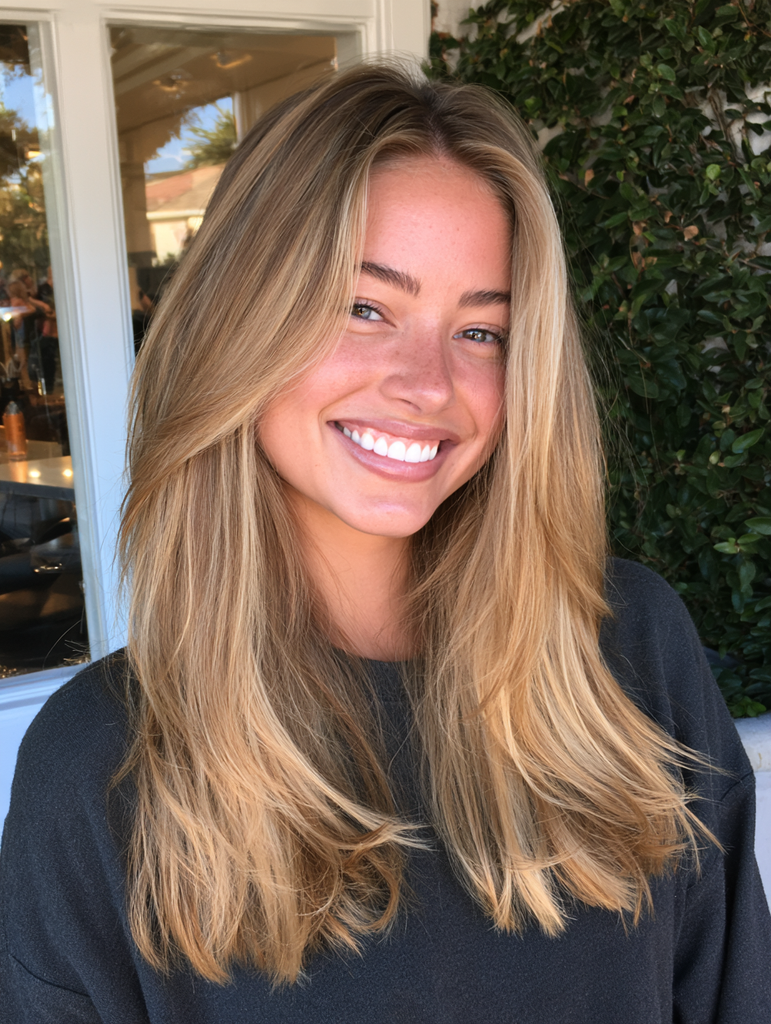
Volumizing mousse can provide lift at the roots before blow-drying. Use a round brush to create gentle body, then finish with lightweight texture spray. Avoid heavy oils and excessive layering because they can make fine hair appear flatter or thinner.
How to Style Long Layered Hair
Start with a lightweight heat protectant before blow-drying, especially when using round brushes, curling irons, or flat irons. For a smooth finish, direct each layer with a round brush and curve the ends gently.
If you prefer waves, divide the hair into manageable sections and use a large barrel to create loose bends. Alternate the direction of some waves for a more natural appearance. Finish by running your fingers through the hair rather than brushing aggressively, preserving the separation between the layers.
Let Your Length Work Harder
Long layers can be subtle or dramatic depending on where the shortest pieces begin and how much texture is incorporated throughout the haircut. Face-framing layers provide gentle definition, while butterfly and shag-inspired cuts create noticeably more volume.
Consider your hair density, natural texture, and preferred styling time when choosing your version. Would you choose soft cascading layers, dramatic butterfly layers, a long shag, or elegant face-framing layers?
