A bob with bangs can give thin hair a beautifully defined shape while adding personality around the face. The right combination of length, fringe, and carefully placed layers can make fine strands appear fuller without weighing them down.
Blunt ends help preserve density, while graduated backs and subtle texture create movement. Bangs can also completely change the character of a bob, from polished and sophisticated to soft and effortless. These styles offer versatile ways to give thin hair structure while keeping the overall haircut light, modern, and easy to personalize.
Why Bobs with Bangs Stay So Versatile for Fine Hair
Thin hair often benefits from shorter lengths because less weight allows the roots to maintain more lift. A bob provides that shorter structure while keeping enough length for face-framing and styling variety.
Bangs add another opportunity to create visual fullness because they bring more hair toward the front of the hairstyle. The key is choosing a fringe that suits your density. Lightweight side bangs, curtain bangs, and carefully shaped blunt fringes can all work when the rest of the bob preserves enough weight.
Blunt Bob with Full Bangs
A blunt bob with full bangs creates a strong, clean silhouette that can make thin hair appear denser. The straight perimeter keeps the ends looking substantial instead of wispy.
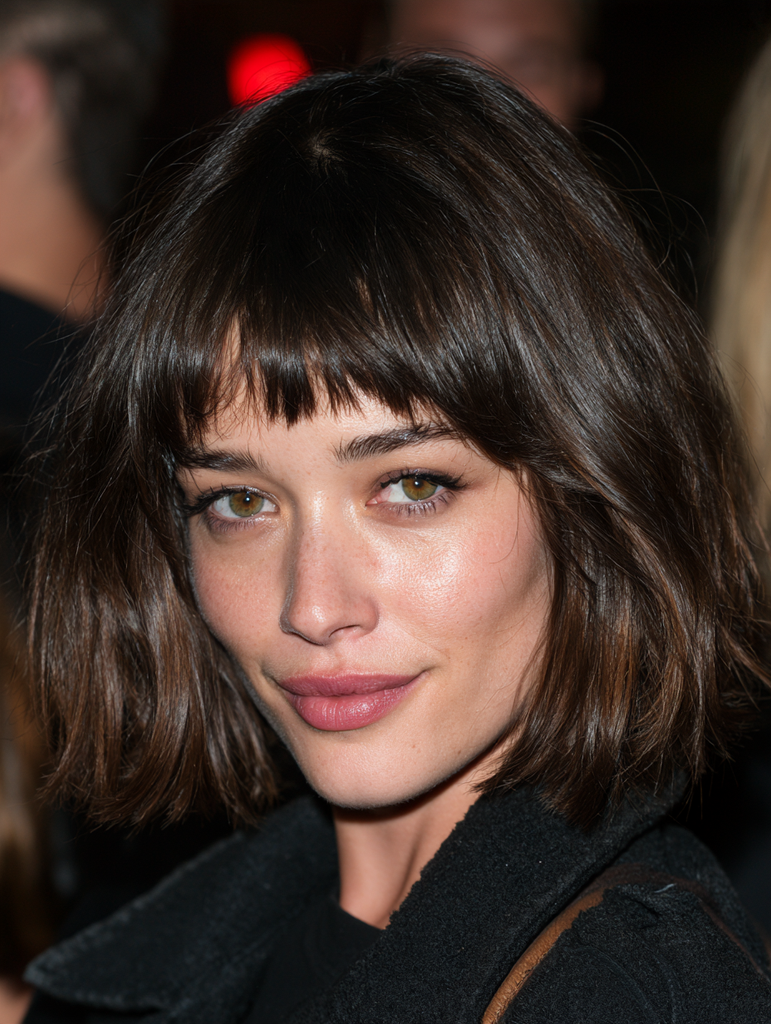
Keep the bob around the jaw or slightly below, depending on your preferred length. The bangs should remain fairly even but not excessively thick if your hair is very fine. A smooth blowout highlights the precision of the haircut, while slightly curved ends can soften the overall appearance.
Short Bob with Side-Swept Bangs
A short bob paired with side-swept bangs creates movement without sacrificing density. The diagonal fringe adds softness while the compact length helps fine strands maintain natural lift.

Keep the bangs long enough to blend into the front sections rather than ending abruptly. Preserve a strong perimeter around the bob and avoid excessive thinning. Blow-dry the roots upward, then sweep the fringe across the forehead with a round brush for a polished finish that remains easy to maintain.
Stacked Bob with Wispy Bangs
A stacked bob creates fullness through the back while wispy bangs provide a lighter frame around the forehead. The combination works particularly well when fine hair needs more structure.

Keep the graduation smooth and concentrated toward the back rather than adding numerous layers throughout the haircut. The fringe should remain airy and softly separated. A lightweight volumizing mousse can lift the roots, while a small round brush helps shape both the stacked sections and the delicate bangs.
French Bob with Micro Bangs
A French bob with micro bangs creates a distinctive silhouette while keeping thin hair compact and visually substantial. The shorter fringe draws attention toward the eyes and gives the haircut a fashionable character.

Keep the bob around the jawline with a relatively strong perimeter. The micro bangs can be blunt for a graphic finish or lightly textured for softness. This style works especially well with straight hair, although natural waves can create an appealingly relaxed version with minimal styling.
Layered Bob with Curtain Bangs
Curtain bangs bring softness to a layered bob while creating movement around the forehead and temples. Their center-opening shape blends naturally into the surrounding layers.

Keep the bob relatively short while preserving enough weight through the ends. The layers should be subtle so fine strands do not become overly separated. Blow-dry the bangs away from the face using a round brush, then allow them to curve naturally into the front sections for a soft, flattering finish.
Angled Bob with Side Fringe
An angled bob creates a longer front that adds definition while a side fringe introduces a complementary diagonal line. This combination gives thin hair a structured yet dynamic appearance.

Keep the front section slightly below the chin and the back gradually shorter. The side fringe should blend into the longer front instead of appearing disconnected. A sleek finish emphasizes the angle, while loose bends through the front create a softer interpretation. This style is particularly effective for straight fine hair.
Chin-Length Bob with Wispy Curtain Bangs
A chin-length bob maintains a strong perimeter while wispy curtain bangs provide delicate framing. This combination keeps fine hair looking substantial without making the front appear too heavy.

Part the bangs through the center and let them gradually lengthen toward the temples. Keep the ends of the bob relatively blunt to preserve density. A subtle inward curve through the bottom gives the hairstyle a polished shape, while a slightly tousled finish creates a more relaxed everyday appearance.
Inverted Bob with Side-Swept Fringe
An inverted bob creates natural lift through its shorter back while the longer front provides visual length. A side-swept fringe adds softness and directs attention diagonally across the face.

Keep the graduation blended rather than sharply stacked, especially when the hair is delicate. The front should retain enough weight to look substantial. Blow-dry the shorter back sections upward and smooth the longer pieces forward. This creates a polished silhouette with noticeable volume without relying on heavy products.
Textured Bob with Piecey Bangs
A textured bob gives thin hair movement through subtle separation while piecey bangs add a relaxed, contemporary finish. The hairstyle looks fuller because the texture creates dimension without requiring excessive volume.

Ask for light texturizing rather than aggressive thinning. Keep enough weight through the perimeter so the ends do not appear sparse. Apply a small amount of styling paste to the bangs and ends, separating individual sections with your fingers. This creates an effortless finish that works particularly well with slightly wavy hair.
Sleek Bob with Long Side Bangs
A sleek bob with long side bangs creates a refined shape while keeping most of the hair concentrated through the perimeter. The extended fringe provides softness without removing too much density.

Keep the bob around the chin or slightly below and allow the bangs to blend into the front. Straighten the hair carefully after applying heat protectant, then sweep the fringe diagonally. Tucking the shorter side behind one ear can emphasize the asymmetrical direction while keeping the overall look sophisticated.
Soft Wavy Bob with Curtain Fringe
A soft wavy bob creates dimension through loose bends, while curtain fringe provides gentle framing around the forehead. Together, they make fine hair appear more textured and lively.

Keep the waves relaxed and begin them below the roots so the crown retains some lift. The curtain fringe should remain lightweight and blend into the front layers. Use mousse before styling and gently separate the waves afterward. Avoid heavy oils that could flatten the finished shape.
Graduated Bob with Feathered Bangs
A graduated bob provides controlled fullness through the back, while feathered bangs introduce softness around the forehead. The combination creates movement without removing too much density from fine hair.

Keep the back slightly shorter and gradually lengthen the front toward the chin. The feathered fringe should blend into the sides rather than creating a blunt interruption. A round brush can lift the roots and turn the ends gently inward, producing a polished hairstyle with natural-looking body.
Asymmetrical Bob with Side Bangs
An asymmetrical bob introduces visual interest by keeping one side slightly longer than the other. Side bangs reinforce the diagonal direction while helping thin hair maintain a strong overall outline.

Keep both sides sufficiently substantial so the hair does not appear sparse. The longer section can fall toward the jaw or slightly below it, while the shorter side remains closer to the cheek. Wear it sleek to emphasize the geometry or add loose bends for a softer finish.
Tousled Bob with Feathered Curtain Bangs
A tousled bob with feathered curtain bangs offers a relaxed alternative to sharply structured styles. The soft layers create movement while the fringe frames the forehead without appearing heavy.

Keep the bob relatively compact and preserve weight around the ends. Feather the bangs gradually toward the temples, allowing them to blend into the surrounding hair. Use a lightweight texturizing spray and gently scrunch the lengths. Leaving the ends slightly undone creates an effortless finish without making thin hair appear overly sparse.
Easy Styling Tricks for Fuller-Looking Bangs and Bobs
Begin with lightweight volumizing mousse at the roots, then blow-dry the hair while directing the roots upward. Avoid heavy creams and oils near the scalp because they can quickly flatten fine strands.
For bangs, use a small round brush to create lift and direction. A side part can add instant volume, while curtain bangs can be dried away from the face for a softer shape. When curling the bob, create loose bends rather than tight curls so the hairstyle retains a natural, airy appearance.
Choosing the Right Bob and Fringe Combination
Fine hair generally benefits from preserving as much weight as possible around the perimeter. Excessive layering or thinning can make the ends appear even more delicate, so strategic cutting is especially important.
Think about how much daily styling you enjoy before choosing your fringe. Blunt bangs require regular shaping, while side-swept and curtain bangs offer more flexibility as they grow. Whether you prefer a sleek bob, graduated shape, or tousled cut, the best combination should make your hair feel fuller while fitting naturally into your routine.
