Finding a bob that works for both thin hair and a round face is all about balancing fullness, length, and movement. The right shape can make fine strands appear denser while creating a more elongated visual frame around the face.
Instead of relying on heavy layers, these bobs use thoughtful graduation, angled ends, side parts, and strategic texture. From sleek lobs to softly layered cuts, each option offers a different way to add dimension while keeping the hairstyle flattering, modern, and manageable.
Bob Shapes That Add Body and Visual Length
Thin hair benefits from cuts that preserve weight through the perimeter while creating controlled lift around the crown. Meanwhile, round faces often look beautifully balanced with shapes that introduce length and diagonal movement.
Longer front sections, side-swept details, and off-center parts can help create those lines without making the haircut complicated. The ideal bob should therefore provide enough structure to make fine strands look substantial while avoiding excessive fullness directly beside the cheeks.
Angled Lob with Blunt Ends
An angled lob creates a longer front that naturally draws the eye downward, making it particularly useful for round facial proportions. Blunt ends preserve the density that thin hair needs.
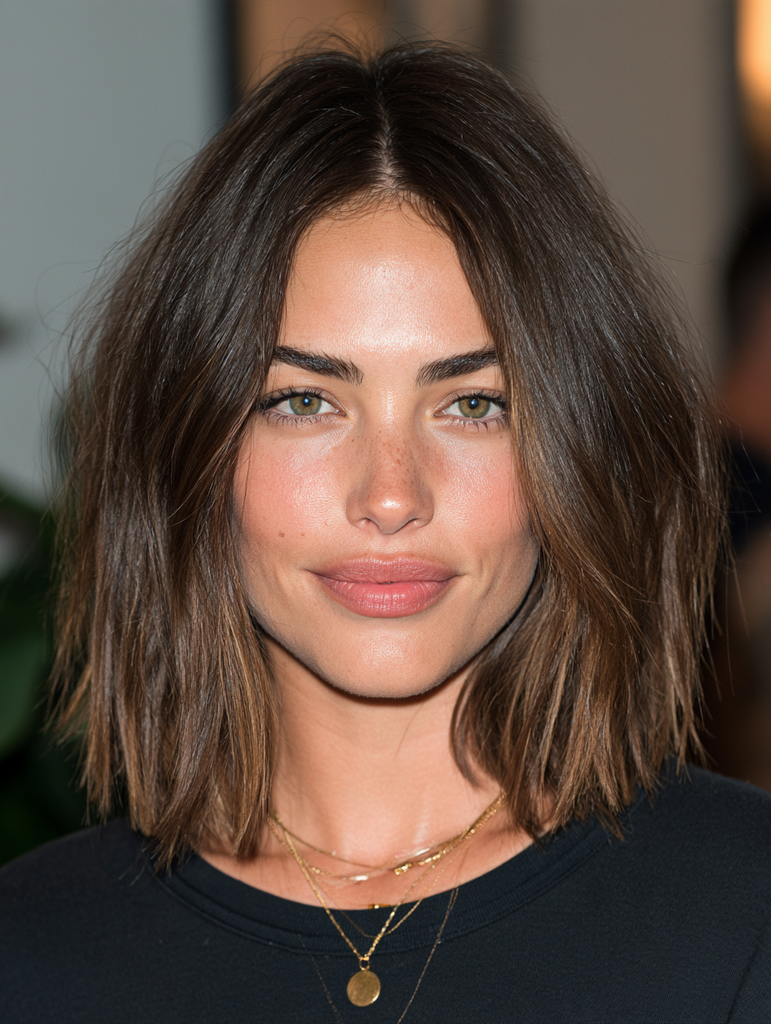
Keep the back slightly shorter and let the front extend below the chin. This creates a clean diagonal line without adding unnecessary width around the cheeks. A smooth finish emphasizes the angle, while gently bending the ends creates softer movement. A side part can provide additional root lift and asymmetry.
Side-Parted Stacked Bob
A side-parted stacked bob combines graduated layers with strategic root lift. The shorter back creates fullness, while the side part shifts attention away from the widest portion of a round face.

Keep the front long enough to fall below the chin, preserving visual length around the face. The stacked layers should remain blended rather than heavily choppy. Blow-dry the crown upward with a round brush, then smooth the longer front sections for a polished shape with natural-looking dimension.
Long Bob with Face-Framing Layers
A longer bob provides enough length to visually elongate a round face while retaining the fullness that fine hair needs. Face-framing layers add movement without removing too much density.

Keep the shortest framing pieces below the cheekbones and allow them to blend into the rest of the haircut. Avoid excessive layering around the sides because thin hair needs weight. Soft waves can enhance dimension, while a sleek finish creates a more refined silhouette for professional or formal settings.
Sleek Inverted Bob
An inverted bob creates a graduated shape that is shorter at the back and longer toward the front. The diagonal structure adds definition while helping fine hair maintain volume near the crown.

Keep the front sections below the chin to avoid ending directly at the widest part of the face. The back can be lightly stacked to create fullness without appearing bulky. Straight styling emphasizes the clean geometry, while subtly curved ends create a softer and more feminine finish.
Wispy Layered Lob with Side Fringe
A wispy layered lob creates movement while maintaining enough overall length to complement a round face. A side fringe adds a diagonal line that visually breaks up facial symmetry.

Keep the layers long and concentrated around the lower sections so thin hair retains its density. The fringe should blend smoothly into the front layers rather than appearing disconnected. Use lightweight mousse at the roots and finish with a soft wave through the ends for an airy, dimensional appearance.
Chin-to-Collarbone Graduated Bob
A graduated bob that moves from chin length toward the collarbone creates an elegant downward flow. This extended shape can help visually lengthen a round face while keeping the haircut manageable.

Maintain a relatively strong perimeter so fine strands do not look sparse. Subtle graduation underneath provides lift without removing excessive weight. This bob can be worn straight for a sleek appearance or styled with loose bends for additional movement. A side part gives the roots a natural-looking boost.
Textured Bob with Deep Side Part
A deep side part gives a textured bob instant asymmetry while lifting the roots on the heavier side. The effect can make fine hair appear fuller and create a more elongated facial frame.

Keep the overall length below the chin and use very subtle texture through the ends. Avoid aggressive thinning, which can make delicate strands appear even finer. Add loose bends with a curling iron, then separate them gently with your fingers for a relaxed, modern finish.
Shoulder-Grazing Blunt Lob
A shoulder-grazing blunt lob provides length and a strong perimeter, two useful qualities for thin hair and round faces. The clean ends create the appearance of greater density.

Keep the cut relatively simple and avoid excessive layers. A center part can create a symmetrical, elongated line, while an off-center part adds softness and movement. Wear the hair sleek for maximum visual length or introduce very loose waves that begin below the cheekbones.
Soft A-Line Bob with Side Sweep
A soft A-line bob gradually becomes longer toward the front, creating a flattering diagonal silhouette. The side sweep adds another directional element while helping fine hair retain a substantial outline.

Let the front sections extend below the chin and keep the back lightly graduated. The side-swept styling should flow naturally into the longer pieces rather than creating a heavy fringe. This shape looks polished when smooth but can also be softened with gentle bends through the front.
Layered Bob with Crown Lift
A layered bob with controlled crown volume creates height without sacrificing too much density through the ends. The additional vertical movement can complement a round face beautifully.

Keep the layers concentrated around the crown and upper sections, leaving the perimeter relatively strong. Blow-dry the roots upward using a round brush, then smooth the lengths. A lightweight texture spray can provide separation without weighing the hair down. This approach works especially well for fine hair that tends to fall flat quickly.
Asymmetrical Bob with Longer Front
An asymmetrical bob introduces visual interest by making one front section slightly longer than the other. The uneven length creates diagonal movement that can complement rounded facial proportions.

Keep both sides long enough to maintain visual weight, especially if your hair is very fine. The longer section can fall below the chin while the shorter side sits slightly higher. Wear the style sleek to emphasize the asymmetry, or add subtle waves for a softer interpretation.
Soft Wavy Lob with Long Layers
A soft wavy lob creates gentle movement while retaining enough length to visually elongate a round face. Long layers prevent the waves from becoming too heavy and preserve the shape of fine strands.

Begin the waves below the cheekbones rather than creating fullness directly beside the face. Keep the ends slightly undone for an effortless finish. Lightweight mousse can enhance texture without flattening the roots. This style works especially well when you want movement without sacrificing the appearance of density.
Polished Bob with Curtain Bangs
A polished bob with curtain bangs combines a structured perimeter with soft face-framing detail. The center-opening fringe creates vertical movement while the bob keeps fine hair looking controlled and substantial.

Keep the bangs longer toward the temples so they blend naturally into the front sections. The bob should retain most of its weight through the ends. Blow-dry the fringe away from the face with a round brush, then smooth the remaining hair for a sophisticated finish that remains versatile.
Easy Styling Techniques for More Body and Length
Start with a lightweight volumizing mousse at the roots and avoid applying heavy products throughout the lengths. Blow-dry the crown upward while keeping the sides relatively smooth.
When adding waves, begin below the cheekbones to avoid creating unnecessary width around the face. A deep side part can instantly create root lift, while a center part can emphasize a longer vertical line. Finish with a light texture spray rather than heavy oils or creams that may flatten fine strands.
Choosing the Right Bob for Your Hair and Face
The best bob should address both your hair density and facial proportions. Thin hair generally benefits from preserved weight, while round faces often work well with longer front sections and directional styling.
Consider how your hair behaves naturally before choosing a heavily styled cut. A blunt lob may require minimal effort, while a textured bob offers more movement when you enjoy daily styling. With the right length and carefully controlled layers, a bob can create the appearance of fuller hair while beautifully framing a round face.
