Wavy wolf cut hairstyles combine choppy layers, natural movement, and effortless volume for a modern haircut with plenty of personality. The style blends elements of a shag and mullet, creating shorter layers around the crown while keeping more length through the sides and back.
Natural waves make this haircut especially appealing because they soften the transitions between different lengths. Whether your hair is thick, fine, shoulder-length, or long, the wolf cut can be adjusted to create more volume or a gentler silhouette. Here are versatile ideas to inspire your next wavy haircut.
What Keeps the Wavy Wolf Cut Relevant
The wavy wolf cut works particularly well because its layered structure complements natural texture instead of requiring perfectly smooth styling. Waves can emphasize the separation between the shorter crown pieces and longer lengths.
It is also highly customizable. More dramatic layers create a bold, heavily textured appearance, while longer and softer layers produce a more wearable version. Face-framing pieces, curtain bangs, and different parting options can further change the overall shape.
Long Wavy Wolf Cut with Face-Framing Layers
A long wavy wolf cut keeps plenty of length while introducing shorter layers around the crown and face. The contrast creates volume without sacrificing the flowing appearance of longer hair.
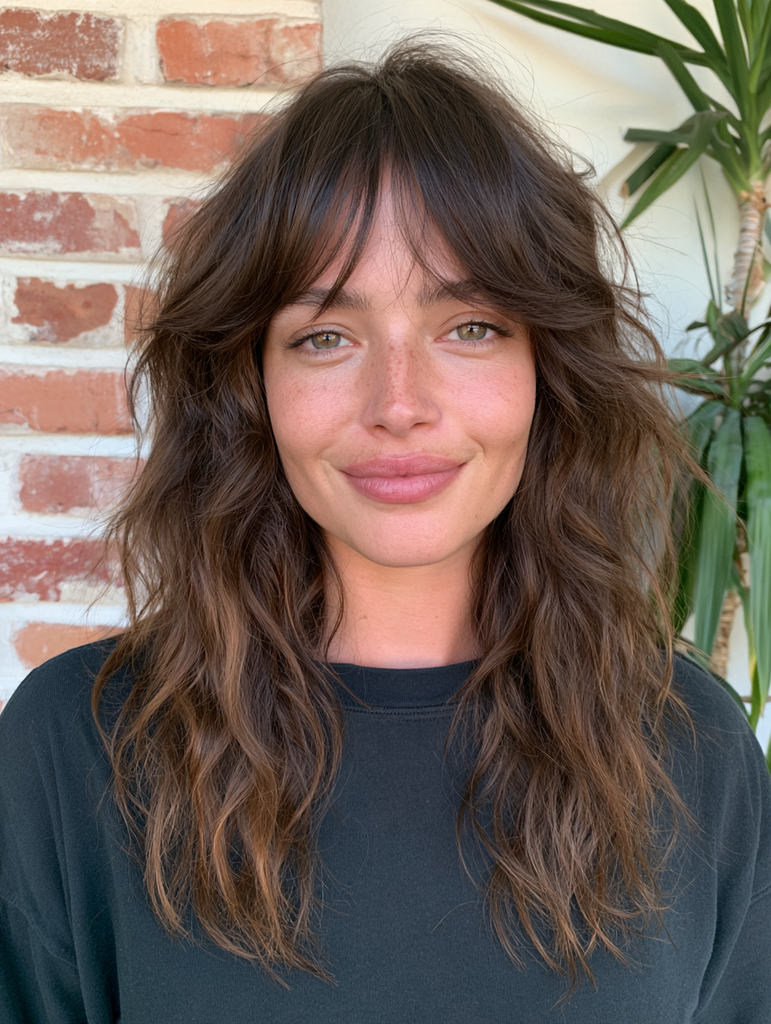
Apply lightweight mousse to damp hair and scrunch upward to encourage your natural waves. Diffuse the crown while allowing the longer sections to dry naturally. Once completely dry, separate a few face-framing waves with your fingers for added definition.
Shoulder-Length Wavy Wolf Cut
A shoulder-length wolf cut creates a balanced silhouette with noticeable texture without becoming extremely short. Layers around the crown add volume, while the longer sections frame the shoulders.

Work a lightweight wave cream through damp hair and scrunch from the ends upward. Use a diffuser around the roots for additional lift. Once dry, gently shake the roots with your fingertips and separate selected waves to emphasize the layered shape.
Wavy Wolf Cut with Curtain Bangs
Curtain bangs naturally complement the open, textured shape of a wavy wolf cut. The center-parted fringe creates soft framing around the forehead while blending into the shorter crown layers.

Apply curl or wave cream to the bangs while damp and direct each side outward with your fingers. Scrunch the remaining layers and diffuse gently. Allow the bangs to retain their natural bend rather than forcing them completely straight.
Short Wavy Wolf Cut
A short wavy wolf cut creates a bold, textured shape with plenty of movement around the crown and sides. Shorter layers give the hairstyle noticeable lift while the ends maintain enough length for softness.

Apply volumizing mousse to damp hair and scrunch thoroughly. Diffuse the crown first, then allow the lower sections to dry naturally. Use a small amount of texture paste on selected ends to create definition without making the hairstyle feel stiff.
Wavy Wolf Cut with Wispy Bangs
Wispy bangs give a wavy wolf cut a softer appearance while preserving the haircut’s textured personality. The lightweight fringe allows some forehead visibility and blends naturally into the surrounding layers.

Blow-dry the bangs gently with your fingers or allow them to follow their natural wave. Apply texture spray through the remaining hair and scrunch lightly. Once dry, separate a few strands across the forehead to keep the fringe airy and relaxed.
Long Wavy Wolf Cut with Curtain Layers
Curtain layers create a gradual transition from the face into the longer sections of a wolf cut. The shorter pieces around the cheekbones move outward before blending into the waves below.

Use lightweight mousse on damp hair and direct the front layers away from the face. Scrunch the remaining lengths and diffuse on low heat. Finish by gently lifting the roots and separating the front waves with your fingertips.
Wavy Wolf Cut with Choppy Layers
Choppy layers make the wolf cut more pronounced by creating visible differences between the crown, sides, and lower lengths. Natural waves soften these transitions and give the haircut a deliberately undone appearance.

Apply texturizing mousse to damp hair and scrunch upward. Use a diffuser to enhance the crown while keeping the ends slightly separated. A small amount of styling paste can define individual pieces once the hair is completely dry.
Soft Wavy Wolf Cut for Fine Hair
Fine wavy hair can benefit from a softer wolf cut with carefully controlled layers. Keep enough fullness through the lower sections while adding shorter pieces around the crown to encourage lift.

Apply volumizing mousse at the roots and lightweight wave cream through the lengths. Diffuse with your head slightly tilted forward to create additional volume. Avoid heavy products that can flatten the waves and make the layered shape less noticeable.
Voluminous Wavy Wolf Cut for Thick Hair
Thick wavy hair provides natural fullness that can make a wolf cut especially dramatic. Strategic layers help distribute some of the density while creating movement throughout the shape.

Apply a lightweight smoothing cream to damp hair before scrunching. Diffuse around the crown and allow the longer sections to dry with minimal manipulation. Once dry, separate selected waves with your fingers and use a tiny amount of serum to control flyaways.
Wavy Wolf Cut with Side Part
A side part gives the wavy wolf cut an asymmetrical shape and can create additional volume at the crown. The heavier side naturally falls across the forehead and blends into the face-framing layers.

Create the part while the hair is damp and apply mousse near the roots. Scrunch the lengths, then diffuse gently. Once dry, lift the roots on the heavier side with your fingertips to emphasize the shape.
Layered Wavy Wolf Cut with Side Bangs
Side bangs create a softer diagonal frame while maintaining the distinctive layered structure of a wolf cut. The fringe can gradually merge into the shorter layers around the cheekbones.

Direct the bangs toward one side while damp and encourage their natural wave with your fingers. Apply texture cream through the remaining layers and scrunch upward. Diffuse gently, then use your fingertips to separate the fringe from the surrounding pieces.
Wavy Wolf Cut with Feathered Ends
Feathered ends create a softer interpretation of the wolf cut by tapering the lower sections instead of leaving them heavily choppy. The waves give the feathered pieces natural movement.

Apply lightweight mousse to damp hair and scrunch the ends upward. Use a diffuser around the crown and allow the lower lengths to dry naturally. Once dry, smooth the tips lightly with a small amount of styling cream.
Layered Wavy Wolf Cut with Volume
Extra crown volume makes the layered structure of a wolf cut more noticeable. Shorter upper layers lift naturally, while longer waves create a cascading effect around the sides and back.

Apply volumizing mousse directly to the roots before diffusing. Lift sections with your fingers while drying to encourage height. Finish with flexible texture spray rather than heavy hairspray so the waves remain soft and movable.
Bringing Out the Texture Without Overworking It
Start with damp hair and apply a lightweight mousse, wave cream, or flexible gel depending on your desired definition. Use your fingers to distribute the product evenly through the layers before scrunching upward.
Allow the hair to air-dry for a softer appearance or use a diffuser for additional volume. Avoid brushing once the waves begin forming because this can disrupt the texture. When completely dry, gently shake the roots and separate individual waves with your fingertips.
Finding the Right Wolf Cut Shape for Your Waves
The ideal wolf cut depends on how dramatic you want the layers to appear. Long versions preserve more length, while shorter cuts create stronger volume around the crown. Curtain bangs and face-framing layers can soften the overall shape.
Your natural wave pattern and hair density should also influence the layering technique. Would you prefer a soft long wolf cut, a voluminous shoulder-length version, or a bold choppy interpretation?
