A well-chosen bob can beautifully complement a thin or narrow face by adding width, softness, and balanced movement. The right length and shape can make the face appear more proportionate without overwhelming your natural features.
Bobs offer plenty of flexibility, from chin-length cuts with rounded ends to softly layered lobs with waves. Strategic volume around the sides, gentle texture, and flattering fringe can all help create a fuller-looking frame. Whether your hair is fine, thick, straight, or curly, there is a bob shape that can work beautifully with a thinner face.
Bob Shapes That Create Balance for Narrow Features
When styling a thin face, adding some horizontal movement can create a more balanced appearance. Bobs that finish around the chin, jaw, or shoulders can introduce width without making the hairstyle look bulky.
Soft waves, rounded ends, curtain bangs, and side-swept fringe are particularly useful details. Very long, flat hairstyles can sometimes emphasize facial length, while carefully shaped bobs create more dimension around the sides. The ideal choice depends on your hair texture and the amount of volume you naturally have.
Chin-Length Bob with Soft Waves
A chin-length bob with soft waves creates gentle width around the lower face while keeping the haircut polished. The curved texture adds dimension and prevents the style from appearing too flat.
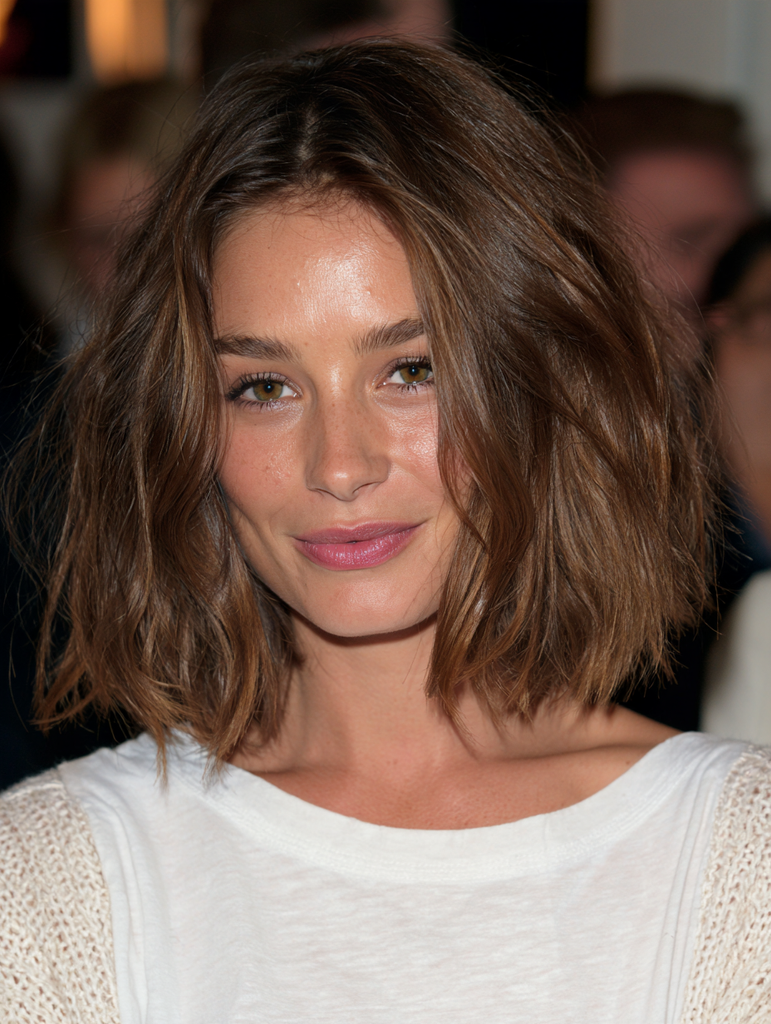
Keep the waves loose and rounded rather than tightly curled, allowing them to expand naturally around the jaw. A side or slightly off-center part can add further movement. This bob works beautifully for straight or naturally wavy hair and can be styled with lightweight mousse for lasting texture.
Rounded Bob with Side-Swept Bangs
A rounded bob creates a soft silhouette that can beautifully complement a narrow face. Side-swept bangs add a diagonal element while the curved shape provides subtle width around the cheeks.

Keep the bob around the chin or slightly below, with ends gently curved inward. The bangs should blend gradually into the front sections rather than creating a harsh line. A round brush can help shape the ends and create root lift, resulting in a polished hairstyle with plenty of softness.
Shoulder-Length Layered Bob
A shoulder-length layered bob provides enough length to frame a thin face without creating an overly elongated silhouette. Subtle layers add movement and prevent the hairstyle from falling completely flat.

Keep the layers concentrated around the lower sections so the haircut maintains enough density. Soft bends through the ends can create additional width, while a side part adds asymmetry. This style is especially versatile because it can be worn sleek, wavy, or loosely curled depending on the occasion.
Bob with Curtain Bangs
Curtain bangs can beautifully soften a narrow face by adding framing around the forehead and upper cheek area. Their center-opening shape creates width without making the hairstyle feel heavy.

Keep the bangs long enough to blend into the sides of the bob. A chin-length or slightly longer cut provides an attractive foundation for the fringe. Blow-dry the bangs away from the face with a round brush, then allow them to curve naturally into the surrounding layers.
Textured French Bob
A textured French bob offers a compact silhouette with soft movement around the jaw. Its shorter length helps create width while the texture keeps the hairstyle from looking overly rigid.

Keep the ends around the jawline and introduce subtle separation throughout the lower sections. Natural waves can make the haircut especially full and relaxed. If your hair is straight, use a lightweight texture spray and create a few loose bends. Avoid excessive product that could flatten the roots.
Wavy Lob with Face-Framing Layers
A wavy lob gives a thin face enough surrounding movement without sacrificing the versatility of a longer haircut. Face-framing layers create width around the cheeks while maintaining a graceful overall shape.

Begin the waves around the cheekbones rather than concentrating all the texture at the ends. Keep the front layers blended into the longer sections. An off-center part can add additional volume and visual balance, making this an excellent choice for medium-density or naturally wavy hair.
Blunt Bob with Rounded Ends
A blunt bob creates a strong perimeter that adds visual fullness around a narrow face. Rounded ends soften the precision of the cut while maintaining its substantial shape.

Keep the length around the jaw or slightly below, depending on your preferred styling. The blunt perimeter works especially well for fine hair because it prevents the ends from appearing sparse. A smooth blowout highlights the clean shape, while gently curving the ends inward creates a softer finish.
Layered Bob with Side Part
A layered bob with a side part combines movement with asymmetry, making it a useful choice for balancing a thin face. The layers add width while the part shifts the visual focus.

Keep the layers soft and blended rather than excessively choppy. A side part can create additional volume at the roots, especially when blow-dried with a round brush. Add loose bends through the ends for extra dimension, or keep the style smooth for a cleaner and more sophisticated appearance.
Curly Bob with Rounded Layers
A curly bob naturally creates width through its texture, making it especially appealing for narrow facial proportions. Rounded layers allow curls to build a balanced shape without becoming overly heavy.

Ask for layers designed around your natural curl pattern rather than using a straight-hair cutting technique. Keep enough length to account for shrinkage and allow the curls to frame the cheeks. Curl cream can enhance definition while preserving softness, bounce, and natural movement throughout the hairstyle.
Asymmetrical Bob with Soft Waves
An asymmetrical bob creates visual interest through uneven lengths while soft waves prevent the haircut from appearing too angular. The combination can add width and movement around a thin face.

Keep the shorter side around the jaw and let the longer section extend slightly farther. The difference should remain subtle enough to look intentional and wearable. Add loose waves from the mid-lengths downward, then separate them gently with your fingers to create an effortless finish.
Bob with Wispy Face-Framing Layers
Wispy face-framing layers create softness around the cheeks while a bob keeps the overall shape compact. This combination can add dimension without making the haircut appear excessively full.

Begin the shortest framing pieces around the cheekbones and blend them gradually toward the ends. Keep the main perimeter strong so the haircut retains its structure. A slight wave through the lower sections can enhance the framing effect, while a side part gives the hairstyle an additional touch of movement.
Easy Styling Techniques for a Fuller Facial Frame
When styling a bob for a thin face, concentrate some volume around the sides rather than directing all the hair straight downward. Loose waves and rounded ends can create attractive width without looking exaggerated.
A round brush can lift the roots while shaping the ends away from the face. For natural waves or curls, use lightweight products that enhance texture without creating stiffness. Changing from a center part to a side part is another simple way to introduce asymmetry and additional volume.
Choosing a Bob That Complements Your Features
The best bob should work with your natural face shape, hair texture, density, and preferred maintenance level. A hairstyle that adds some width around the cheeks can create balance without hiding your distinctive facial structure.
If your hair is fine, consider a blunt or softly graduated perimeter to maintain visual density. Thicker hair can benefit from subtle internal shaping to prevent excessive bulk. Whether you prefer a French bob, wavy lob, curly cut, or classic chin-length style, thoughtful proportions make all the difference.
