Pixie cuts for fine hair over 50 can create a beautifully structured look while making delicate strands easier to manage. The right cut uses strategic layering, a strong perimeter, and controlled volume to make fine hair appear fuller without removing too much density.
Short hair can also offer plenty of styling flexibility. A longer crown, side-swept fringe, tapered nape, or textured finish can completely change the character of a pixie. Whether you prefer something polished or tousled, these styles provide practical options for creating movement and dimension.
The Lasting Charm of These Fine-Hair Pixies
Fine hair often benefits from shorter lengths because there is less weight pulling the strands downward. Carefully positioned layers can lift the crown, while keeping the ends relatively full helps maintain a denser-looking silhouette.
Pixie cuts are also adaptable to different textures and face shapes. The same basic haircut can become softer with feathered layers, sharper with a tapered side, or more playful through piecey texture. Choosing the right amount of layering is especially important when working with fine strands.
Classic Pixie with Side-Swept Bangs
A classic pixie with side-swept bangs creates a clean silhouette while giving fine hair a flattering sense of movement. Keep the crown slightly longer so the strands can be directed upward or diagonally.
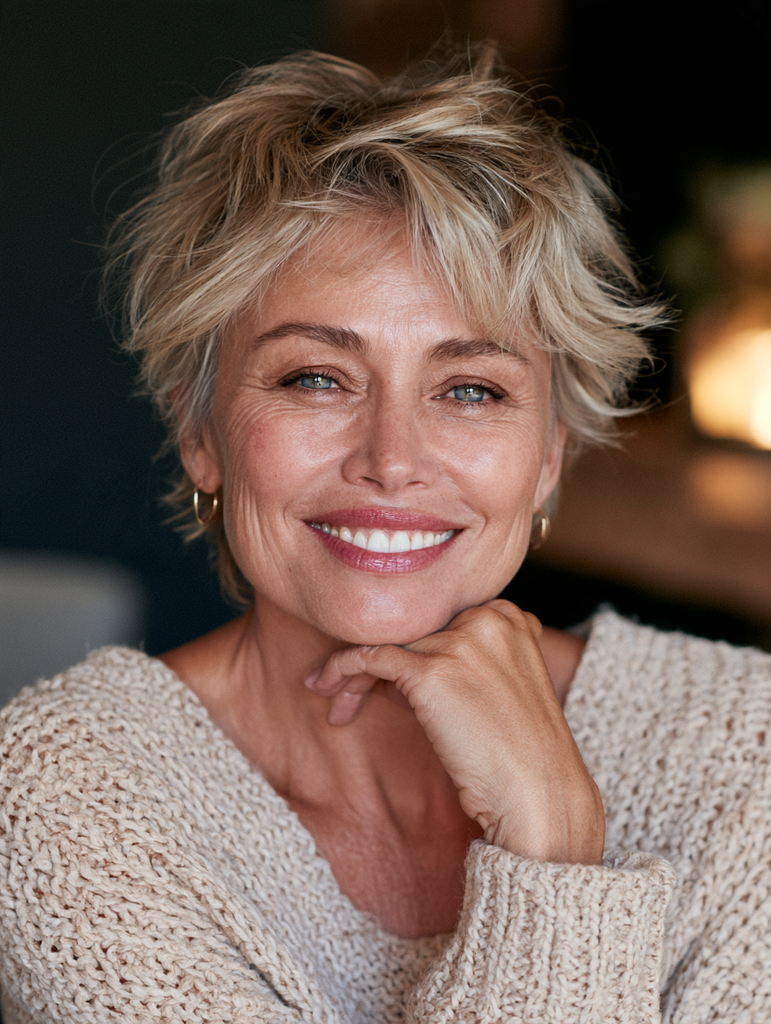
The side fringe softens the forehead and adds visual interest without requiring heavy styling. Apply lightweight volumizing mousse to damp roots, then sweep the bangs across while drying. A small amount of texture cream can separate the ends and create definition without weighing delicate strands down.
Layered Pixie with Crown Lift
A layered pixie with controlled crown layers can give fine hair a noticeably fuller appearance. The key is concentrating the layers through the upper portion while maintaining enough weight around the perimeter.

Blow-dry the crown upward using your fingers or a small round brush, then direct the front slightly backward. A lightweight root-lifting mousse can enhance the shape without leaving the hair stiff. This variation works particularly well when you want volume without relying on excessive teasing or heavy styling products.
Long-Top Pixie with Tapered Sides
A longer top provides styling flexibility while tapered sides keep the overall haircut neat and lightweight. Fine hair can be directed forward, sideways, or slightly upward depending on the desired finish.

The contrast between the longer crown and shorter sides creates visual structure without requiring numerous layers. Use a small amount of mousse for volume or lightweight styling paste for separation. The longer top can also soften the overall appearance, making this an excellent choice for someone transitioning from a longer haircut.
Soft Pixie Bob with Face-Framing Layers
A pixie bob combines the easy maintenance of a pixie with slightly longer sections around the face. This extra length allows fine strands to frame the cheekbones and jawline while the shorter back keeps the haircut lightweight.

Soft face-framing layers should remain controlled so the ends do not appear sparse. A side part can add height at the crown, while gentle bends through the front create movement. This style is especially useful when you want short hair without an extremely cropped appearance.
Feathered Pixie with Wispy Fringe
Feathered layers create soft movement through fine hair while keeping the overall silhouette light and feminine. A wispy fringe blends gradually into the sides, avoiding a heavy horizontal line across the forehead.

After washing, apply a small amount of volumizing foam and direct the layers with your fingertips while drying. Keep the styling relaxed rather than overly precise. The feathered finish allows individual strands to move naturally, creating dimension while preserving enough density for a fuller-looking shape.
Textured Pixie with Piecey Crown
A piecey crown can make fine hair appear more dimensional by separating carefully selected sections. Rather than thinning the entire haircut, keep the underlying shape relatively strong and use texture mainly through the top.

Apply a tiny amount of lightweight styling paste to your fingertips, then work it through individual pieces. Lift the crown slightly and sweep the front toward one side. This creates definition and movement while avoiding the flat, overly slick appearance that heavy products can produce on fine hair.
Side-Parted Pixie with Soft Volume
A side part can instantly change the appearance of a fine-haired pixie by creating asymmetry and additional lift. Keep the crown moderately long so the part can be shifted without exposing too much scalp.

Blow-dry the roots in the opposite direction of the final part before sweeping them into place. This simple technique creates natural-looking volume without excessive teasing. Softly tapered sides keep the shape controlled, while the longer top provides enough movement for everyday styling.
Graduated Pixie with Fuller Nape
A graduated pixie creates subtle fullness through the back while maintaining a neat nape. The graduation should be gentle rather than heavily stacked, especially when working with delicate strands.

The crown can remain slightly longer so it blends smoothly into the graduated back. A quick blow-dry with your fingers is often enough to restore the shape. Add a small amount of lightweight styling cream to the ends when you want definition. The result is polished, practical, and easy to maintain.
Silver Pixie with Textured Top
A silver pixie can showcase natural gray tones beautifully while giving fine hair a modern shape. Keeping the top textured adds dimension and prevents the haircut from looking overly flat.

Use a lightweight volumizing product at the roots and gently lift sections while drying. Avoid heavy oils that can make fine strands appear limp. A few separated pieces around the crown create subtle definition, while the shorter sides keep the overall silhouette crisp and contemporary.
Rounded Pixie with Soft Fringe
A rounded pixie creates a smooth silhouette that works particularly well for fine hair when the layers remain subtle. Soft fringe across the forehead adds gentle framing without creating a heavy visual line.

A small round brush can help shape the crown and front while maintaining natural volume. Keep the ends controlled rather than excessively thinned. This approach produces a classic finish that can be worn sleek and polished or lightly tousled for a more relaxed appearance.
Choppy Pixie with Controlled Layers
A choppy pixie can create lively movement without making fine hair look unnecessarily sparse. The trick is keeping the perimeter substantial while using selective choppy pieces through the crown and front.

Work lightweight texture spray through the upper sections, then separate a few pieces with your fingertips. Avoid coating the entire hairstyle with wax or paste. The resulting finish feels modern and energetic while still maintaining enough structure to make the hair appear intentionally shaped.
Curly Pixie with Tapered Sides
A curly pixie can work beautifully for fine hair when the natural curl pattern is allowed to provide volume. Tapered sides create definition around the shape while leaving sufficient length on top for curls to develop.

Apply lightweight curl mousse or cream to damp hair and gently scrunch. Allow the curls to air-dry or use a diffuser on low heat. Avoid brushing once dry because preserving the curl pattern helps maintain natural volume and prevents unnecessary frizz.
How to Get More Volume From a Fine-Hair Pixie
Fine hair usually responds best to lightweight styling products and controlled heat. Apply volumizing mousse mainly around the roots, then lift the crown while blow-drying. Using your fingers instead of repeatedly brushing the hair can help preserve texture and movement.
Avoid excessive thinning, heavy oils, and thick styling creams that can make delicate strands appear flatter. Regular trims also help maintain the strongest part of the haircut. When the cut itself provides structure, daily styling can remain remarkably simple.
Choosing Your Ideal Pixie Shape
The best pixie for fine hair depends on how you want to wear your hair and how much styling you enjoy. A tapered pixie provides a crisp silhouette, while a longer-top version offers more versatility. Feathered layers create softness, and textured crowns add a modern finish.
Consider your natural texture before choosing the final shape. Would you prefer a smooth side-swept pixie, a softly layered crop, or a tousled style with visible texture? The right cut should complement your hair while fitting naturally into your everyday routine.
